Proposed route
Saronic Gulf
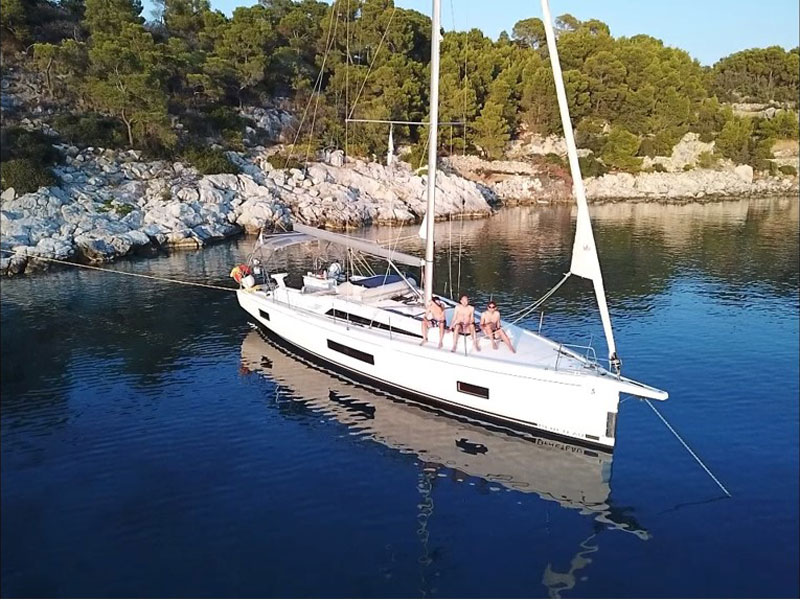
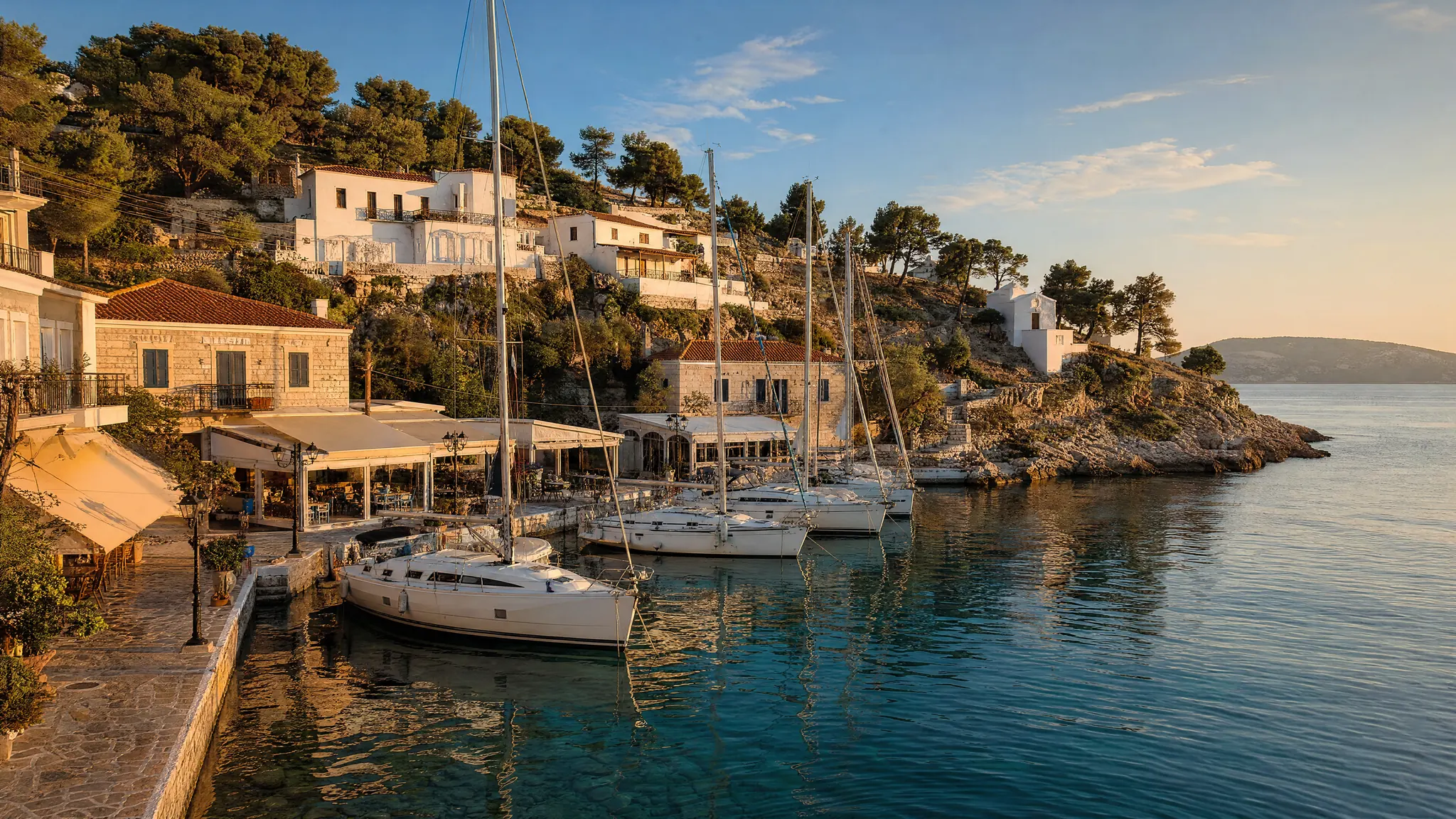
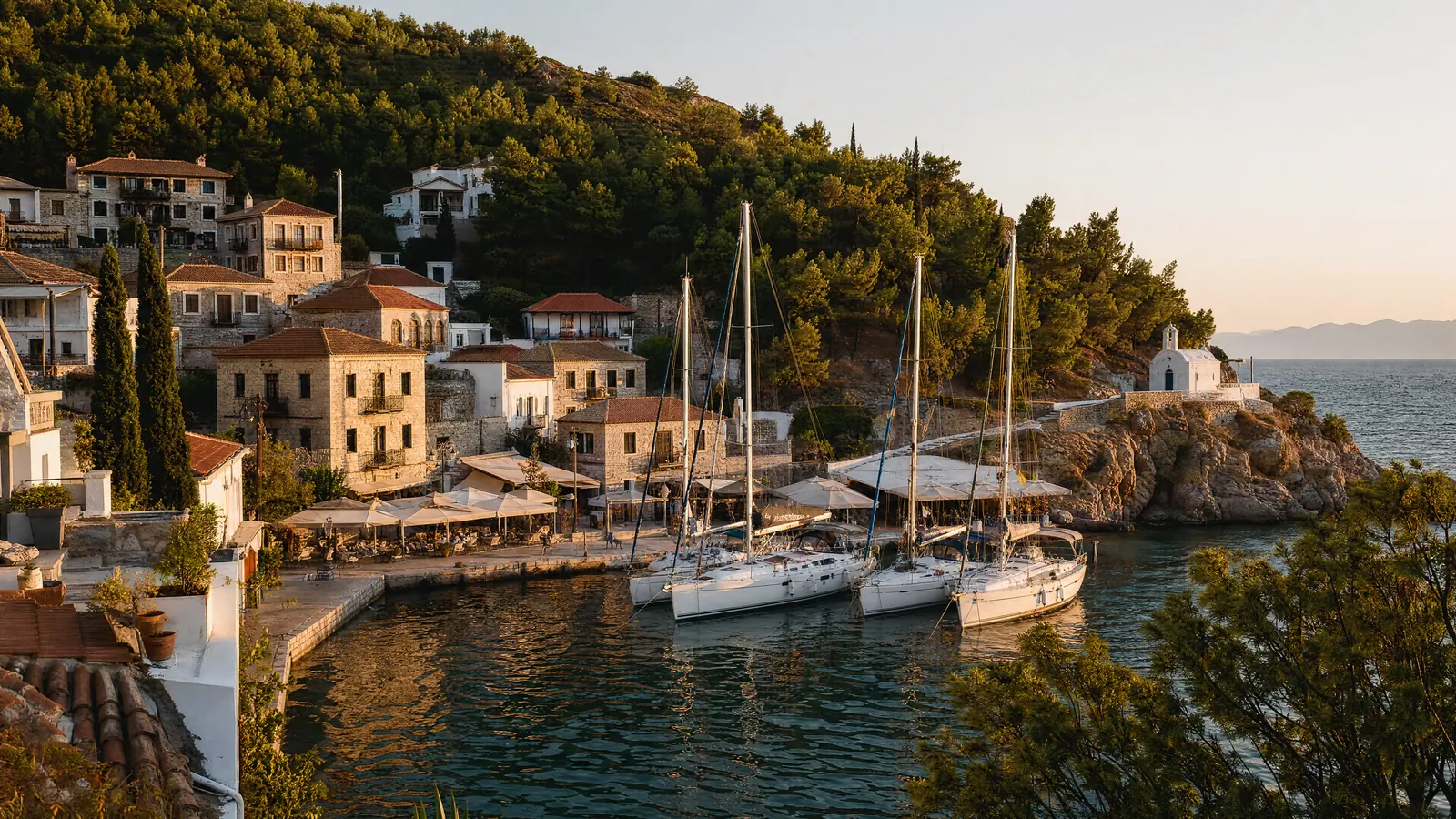
Sheltered water, short hops and pine-covered islands, an hour from Athens.
Sailing here
Saronic Gulf
Sailing is popular in the Saronic Gulf which, like the neighbouring Argolic Gulf, benefits from the Attic mainland's partial shelter from the summer Meltemi — a wind that can reach Force 7 and above further east in the Aegean. It is the gentlest introduction to Greek sailing there is, and the best choice for families, first-timers and anyone who would rather swim than beat to windward.
Highlights
Highlights
- The ancient theatre at Epidaurus, still the finest acoustic in the world
- The temple of Aphaia on Aegina, older than the Parthenon
- Hydra, where there are no cars at all
- Poros and the narrow channel that separates it from the Peloponnese
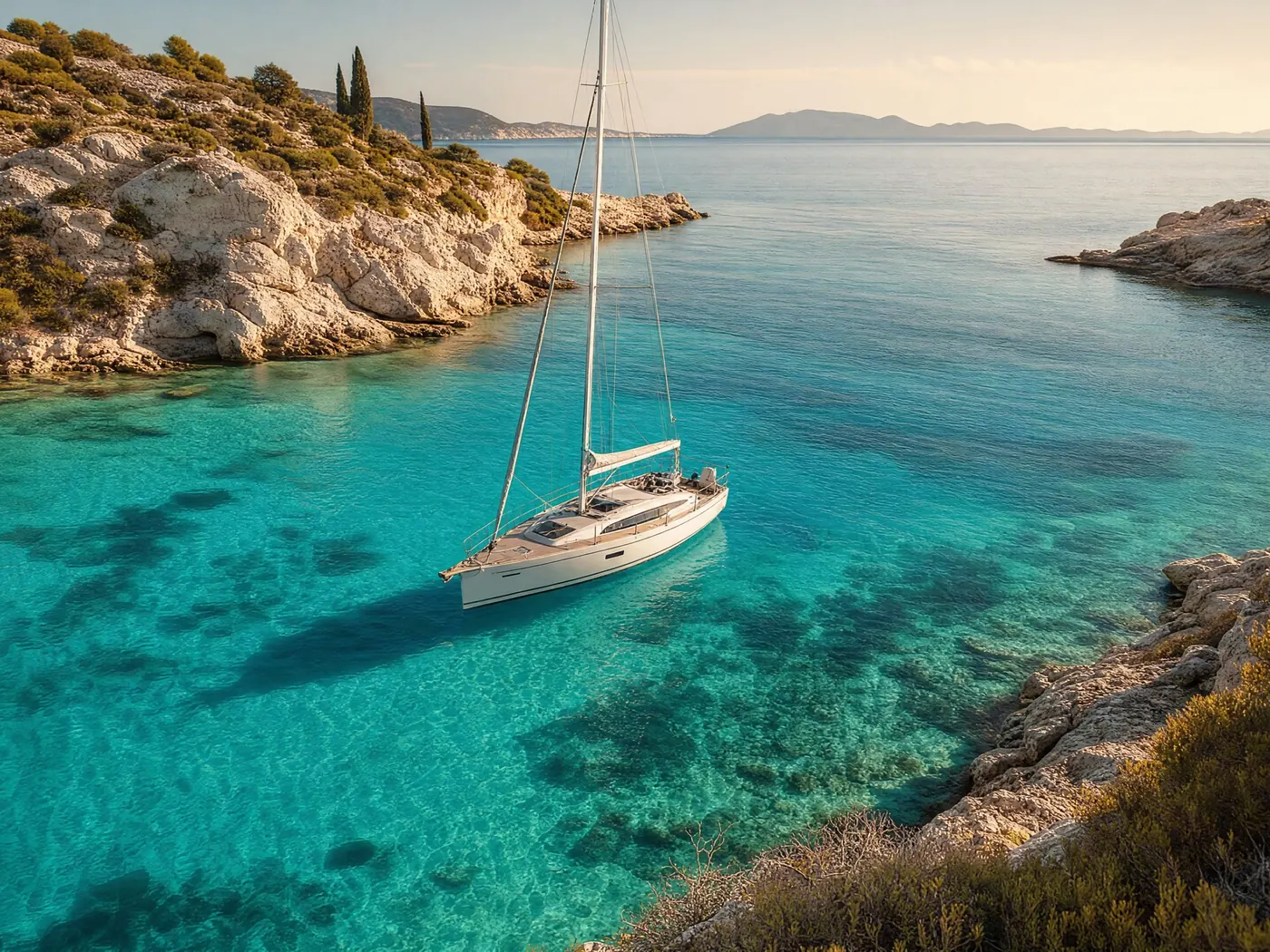
- Short passages — rarely more than three hours between anchorages
- Reliable shelter, which means you sail even when the Aegean is closed
Saronic Gulf
Sailing here
The gulf includes the islands of Aegina, Salamis and Poros, along with the smaller islands of Patroklos and Fleves. The port of Piraeus, Athens' port, lies on the north-eastern edge of the gulf.
Bays in the gulf include Phaleron Bay, Elefsina Bay to the north, Kechries Bay in the north-west and Sofiko Bay in the east. The volcano of Methana lies to the south-west.
History
History
The name comes from the mythological king Saron, who drowned at the Psifaei lake. In myth the Saronic Gulf was a string of six entrances to the Underworld, each guarded by an enemy in the shape of a thief or bandit. The Battle of Salamis, just west of modern Piraeus, was a turning point in European history.
Book your date
Sail this route
Tell us your dates and we will build the itinerary around your crew, the wind and how far you actually feel like sailing each day.