A Power BI report can look impressive while the underlying model is quietly creating problems. Slow visuals, duplicated measures, unclear naming, ambiguous relationships, and inconsistent KPI definitions usually start below the report canvas.
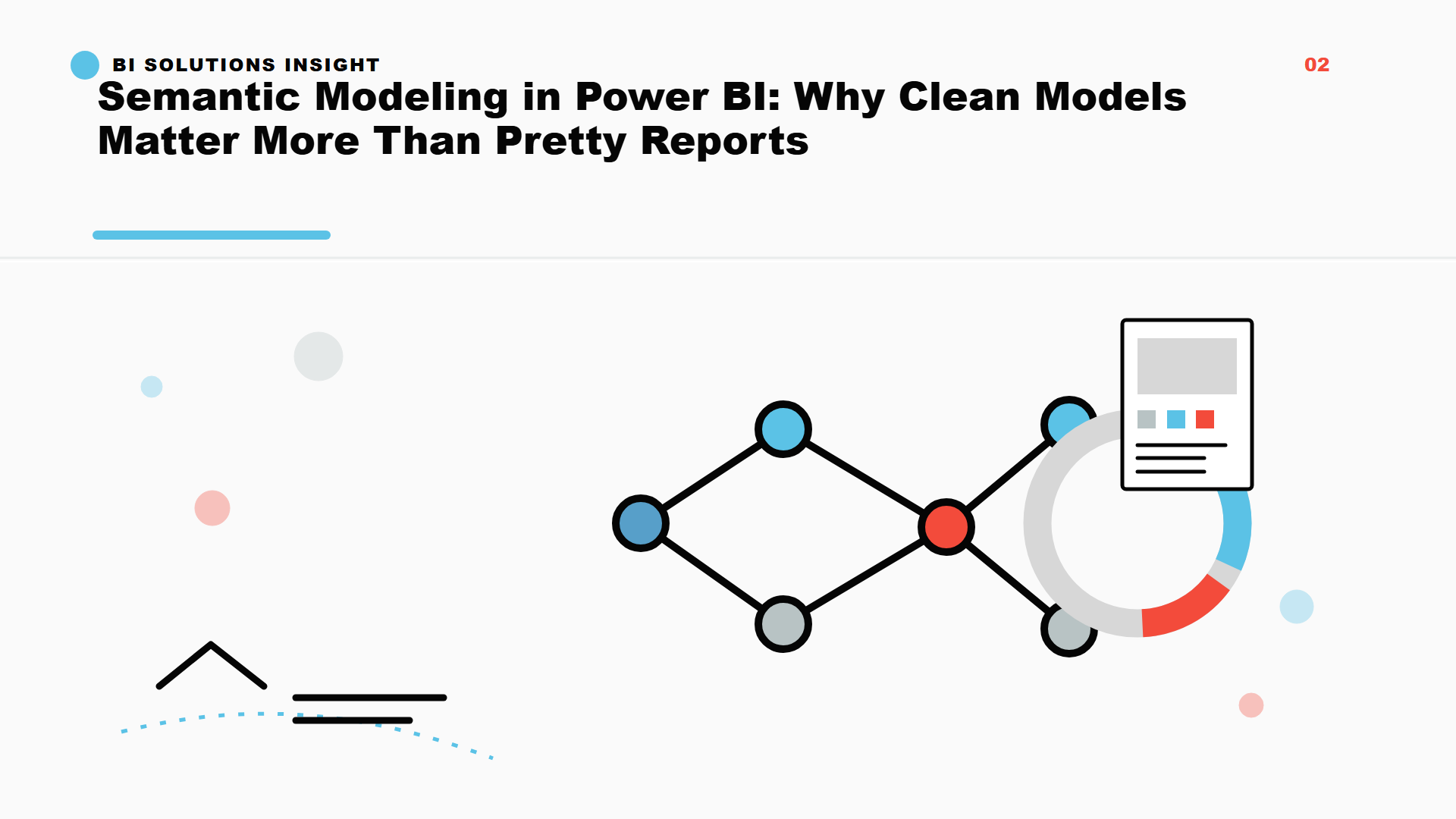
This is why semantic modeling matters. The model is the layer where raw data becomes business meaning. If that layer is weak, every dashboard built on top of it inherits the weakness.
What clean modeling changes
Clean semantic models make reports easier to trust. Tables have a clear purpose. Measures are named consistently. Relationships are understandable. Business definitions live in one place instead of being recreated across pages and reports.
This also improves performance. A model that is structured around the analytical question can reduce unnecessary complexity, improve DAX readability, and make future changes easier to test.
The business problem behind model quality
Model quality is not only a developer concern. It affects business users directly. When two teams calculate revenue, margin, headcount, or pipeline differently, meetings become slower and decisions become weaker.
Clean semantic modeling reduces that friction. It gives teams a shared language for metrics and creates a more stable foundation for dashboards, automated reporting, and executive review.
Review before the model spreads
Power BI environments often become difficult when weak patterns are copied into more reports. A measure naming issue becomes a convention. A confusing table structure becomes the default. A quick workaround becomes business logic.
The BI and semantic modeling service is designed to catch those problems early and make the reporting layer easier to scale.
Better models create better conversations
The point of a semantic model is not technical elegance for its own sake. The point is better decision-making. When the model is clean, teams spend less time debating definitions and more time interpreting performance.
That is why clean models often matter more than pretty reports. Visual design helps people read the story, but the model determines whether the story is reliable.
A practical semantic model review checklist
A useful review should inspect table naming, relationship direction, inactive relationships, measure folders, duplicate calculations, date table design, role-playing dimensions, security rules, and performance-sensitive DAX patterns. It should also check whether business users can understand the model without asking the original developer to explain every decision.
This review is especially valuable before a model spreads across multiple dashboards. Once teams copy unclear logic into new reports, the cost of cleanup increases. A structured semantic model review turns model quality into a repeatable process instead of a one-off expert opinion.
When to refactor a Power BI model
Refactoring becomes worth it when new measures take too long to build, report performance is poor, users disagree about definitions, or the same business logic appears in several places. Refactoring should not be cosmetic. It should make the model easier to maintain, easier to explain, and safer to reuse.
For teams that want a dedicated workflow, Power BI Solutions is positioned around semantic model analysis, diagnostics, and AI-assisted guidance for model improvement.
FAQ
What is semantic modeling in Power BI? It is the design of tables, relationships, measures, and definitions that turn raw data into reusable business meaning.
Can a dashboard be good if the model is bad? It can look good temporarily, but it becomes harder to maintain, validate, and scale as more users depend on it.
Should semantic model work happen before dashboard design? Usually yes. Clear modeling decisions make dashboard design faster and reduce the chance of rebuilding visuals later.