Analytics projects often fail because the data is almost right. Columns exist, tables load, and dashboards render, but values are duplicated, stale, incomplete, or inconsistently defined.
What to check early
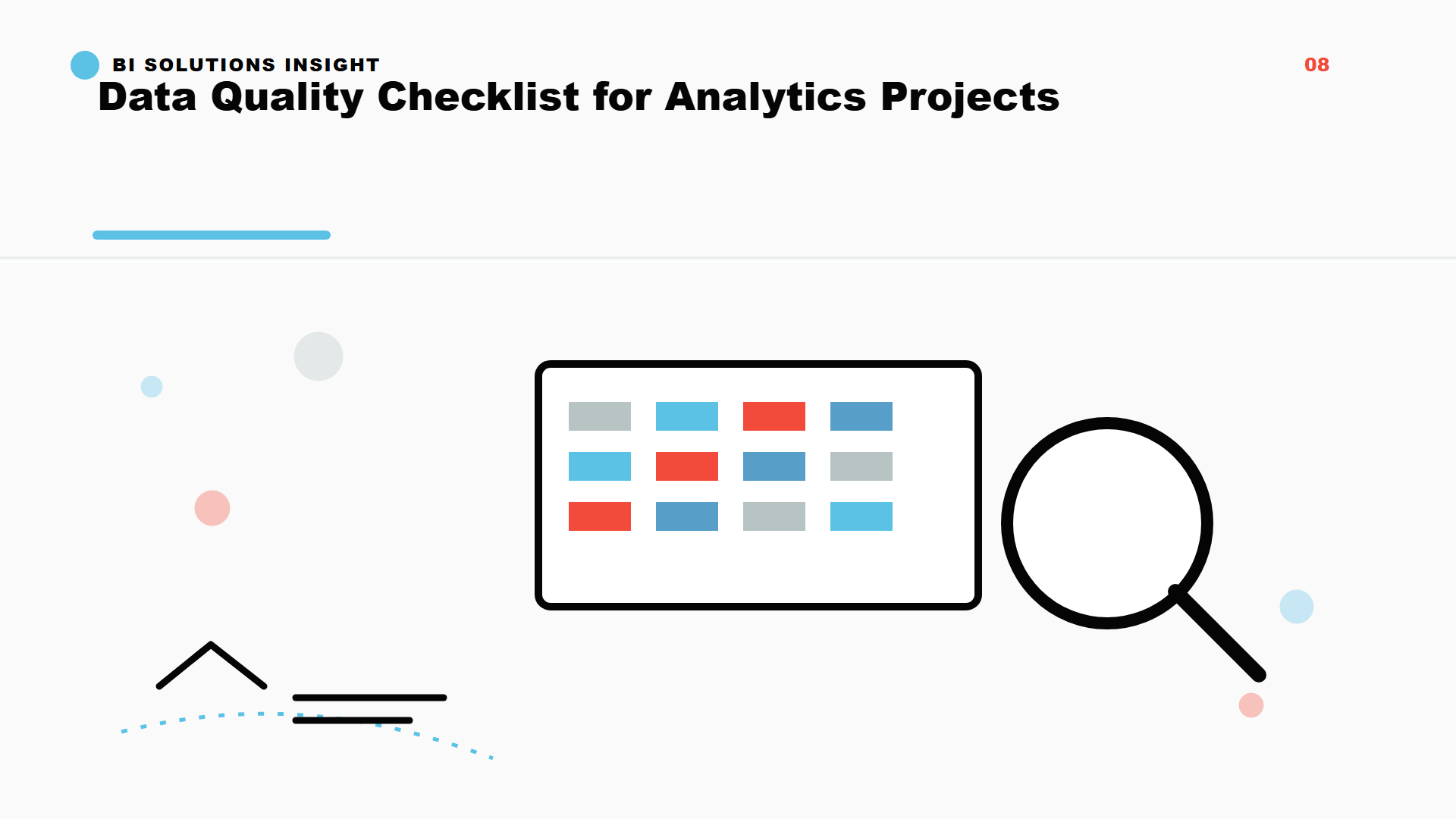
Check source ownership, missing values, duplicate records, date consistency, categorical values, refresh timing, and metric definitions. Also confirm whether sensitive fields are being used correctly.
The data strategy and governance service helps teams make these checks part of the operating process rather than a one-time cleanup.
Quality is a habit
The goal is not perfect data. The goal is visible quality rules so teams know which data can support reporting, AI, and business decisions.
The checklist should follow the business decision
Data quality is not abstract. A sales dashboard, a finance model, and an AI customer assistant have different risk levels. The checklist should focus first on the fields and rules that affect real decisions.
For dashboards, that usually means dates, identifiers, category values, metric formulas, row counts, refresh timing, and source reconciliation. For AI workflows, it also includes sensitive data, document quality, source provenance, and human review rules.
Quality checks should be repeatable
One-time cleanup helps temporarily, but repeatable checks create trust. Teams should document the rule, the owner, the expected threshold, and what happens when the rule fails.
Even simple checks can prevent expensive confusion: duplicate customer IDs, missing invoice dates, mismatched currencies, broken joins, or stale source extracts. The value is not technical purity. The value is fewer bad decisions.
FAQ
What is the first data quality check to run? Start with row counts, duplicate identifiers, missing critical fields, date logic, and reconciliation against a trusted source.
How does data quality affect AI? AI workflows can repeat or amplify weak data. Source quality, sensitive-field handling, and review rules are essential before AI output supports decisions.
Should data quality be owned by IT or the business? Both. Technical teams can automate checks, but business owners must define what values, metrics, and exceptions actually mean.